
How to Make Money from Your Hobby Farm
Becoming a part-time or full-time homesteader is a solid life decision. It’s good for your overall health and wellbeing and is a fun way to live besides. Of course, even as someone able to live off the land, you’re not entirely free of the trappings of modern civilization. There will be bills to pay – utilities, mortgage, and miscellaneous day-to-day expenses. Unless you’re planning on getting a job in the nearby town or city, you’ll need to find a way to make money from your hobby farm to fund your lifestyle.

Photo by Frances Gunn on Unsplash
Becoming a part-time or full-time homesteader is a solid life decision. It’s good for your overall health and wellbeing and is a fun way to live besides. Of course, even as someone able to live off the land, you’re not entirely free of the trappings of modern civilization. There will be bills to pay – utilities, mortgage, and miscellaneous day-to-day expenses. Unless you’re planning on getting a job in the nearby town or city, you’ll need to find a way to make money from your hobby farm to fund your lifestyle.
Fortunately, monetizing your farm shouldn’t be too hard. The demand for food and farm produce keeps climbing, according to the AGMRC. With some forethought and directed effort, you could have a profitable operation up and running in no time. In this mini-guide, we offer some tried-and-tested advice on making money as a homesteader.
Homesteading is running a business
First and foremost, if you’re serious about generating a long-term, sustainable income from your homestead, you will have to treat it as a business. Essentially, be prepared to invest time and money, learn new things, be practical, and take some risks to succeed. Like with any business, you will get back what you put into it, and your decisions will determine your success and failure.
Research the demand in your region
Businesses thrive when their offerings are in demand. To maximize your chances of generating a steady income stream, make sure your efforts align with local demand. Take a look at profitable homesteads in your region and what they grow. Ask yourself who your ideal customer is, and what you’ll do for them.
Evaluate your resources
To make money, you have to utilize the resources at your disposal efficiently to meet demand.
● Your space: Consider your available space, the nature of the soil, the weather, and accessibility (location). Would the space be best utilized for growing food, raising animals, or something else entirely?
● Seed money: How much money can you afford to invest in your endeavor? Can friends or family chip in?
● Knowledge and expertise: Do you have special knowledge of agriculture, horticulture, or similar you can harness? Are you willing to learn something new?
● Help: Do you have someone who can help you with your business or will you be doing it alone? Hiring people is also an option.
Find monetization opportunities
Once you have a good grasp of local conditions and your available resources, you should be able to pinpoint ideal monetization opportunities. The best are the ones in-demand locally, easy to implement, and affordable. Below are some suggestions:
● Sell traditional farm and animal produce: You can sell plant- or animal-based products like fruits, vegetables, flowers, tobacco, dairy, medicinal herbs, meat, honey, and more.
● Process goods: With some investment, you can sell processed goods – think cheese, ice cream, beverages, sauces, yogurts, wine, and tobacco products.
● Cater to tourists: Tourists are often willing to pay for a taste of the “rustic” life. You could launch a bed and breakfast, provide a farm stay or experience, be a glamping destination, and more.
● Teach and educate: If you have homesteading skills, you could teach them to other homesteaders and make money that way – from formal lessons, workshops, and even online lessons. It’s also possible to make money as a homesteading blogger (or by starting a video channel and similar).
● Rent your space: If you don’t want to actively homestead or have more space than you need, you could rent out your space or outbuildings. Campers, vacationers, and even other homesteaders may be willing to rent from you.
Successful homesteaders often do multiple things at once and establish several income streams.
Create a business plan
A business plan is highly recommended if you’re a new business owner. It gives you a good overview – and some much-needed perspective – on your operation, goals, and finances. Writing down your goals forces you to be specific about everything, which is necessary if you want to achieve something concrete.
Consider forming an LLC
Forming an LLC may also be a good idea. It protects your personal assets by separating them from your business ones (say if you’re ever sued). Other advantages over going it as yourself or forming a Company are less paperwork, more flexibility, and some tax perks. You file the paperwork yourself, which is time-consuming, or use a lawyer, which is expensive. Using a formation service is usually the best way to start an LLC – it’s cheap and convenient[JS1] . States have varying regulations around LLC formation. Check the rules carefully before moving forward.
Form a brand
Brands make you more recognizable and credible in the market. Customers are more likely to buy from or do business with brands as compared to a no-brand. Forming a brand isn’t hard – simple brands win, says HBR. Define your personality, come with a catchy name (and slogan), and make sure you communicate the brand at every touchpoint.
Market your products effectively
Like every other business, you will need to market to succeed. Homestead offers several self-promotion ideas: word of mouth, being present at farmer's markets, creating a website, writing a homesteader blog, using social media, cross-promotions, and social media.
Manage your business like a pro
To succeed with your business operation, you will have to manage it carefully. Needless to say, only well-managed businesses remain operational. Here are some suggestions:
● Look after your money: Consider the return of investment (ROI) on everything. Always have enough cash on hand (working capital) for day-to-day expenses, experimentation, and innovation.
● Delegate: You can’t do everything alone – and shouldn’t. Other people can offer perspective, skills, and knowledge you don’t have. Make sure to delegate and ask for help when you need it.
● Save for emergencies: Emergencies – like machines breaking down or errant weather – can throw a wrench in the works. Consider setting up an emergency fund to handle unforeseen situations and expenses.
● Use software: You can use apps to help you run your homestead. Consider using productivity tools, bookkeeping apps, timekeeping apps, and to-do lists to stay organized and in control.
Conclusion
It could take a while for your efforts to bear fruit. Be patient. Also, be open to learning – ask for advice from experienced homesteaders if you ever get stuck. Keep your chin up and be persistent – and you will be sure to succeed.
Sterritt Strategy is a publishing company that assists entrepreneurs, startups, and innovators through media initiatives. We here at Sterritt Strategy are looking to expand our content base to include a wide range of non-gaming life and business strategy content, if you think you have a great article like this one contact James R Sterritt at james@sterrittstrategy.com.. All views presented in this post are solely the opinions of the writer. Neither Sterritt Strategy Publishing, Ltd. nor its owners and operators are in any way represented by this content. Sterritt Strategy Publishing Ltd. is acting solely as a host and editor.
We are pleased to show our first guest blogger on a topic of life strategic thought while doing things, we here at Sterritt Strategy are familiar with personally.
Tina Martin used to work in business administration. It wasn’t long before I got tired of working my tail off to make someone else a lot of money. I decided to pursue something that actually inspired me: becoming a personal fitness instructor. The more I built my client base, the more I realized that the people I worked with had a lot of personal improvement goals, not just those regarding their physical health. So I took another leap of faith and decided to start offering life coaching services.
My life quickly changed for the better once I made the decision that MY ideas matter, that I’m the author of my own life story, and that I can and should be my own inspiration. I believe that if we all took that same approach to life, we’d all be much happier and the world would truly be a better place for it!
I decided to start this website as a side project in addition to working with my clients so I can reach as wide an audience as possible, and encourage them to put their dreams first. After all, if you want to truly be happy, be your own inspiration!
State of the Company 2022
t is with mixed pleasure to announce a new chapter in the history of Sterritt Strategy Publishing, Ltd (SSP). 2020 and 2021 were tough years for Sterritt Strategy as all sales of our products essentially stopped as Meetups canceled dates, Convention closed and word of mouth became shipment only. However, we here at SSP are still in it for the long haul and we have shifted our strategy as a company to become more hobbyist and far broader in our scope.

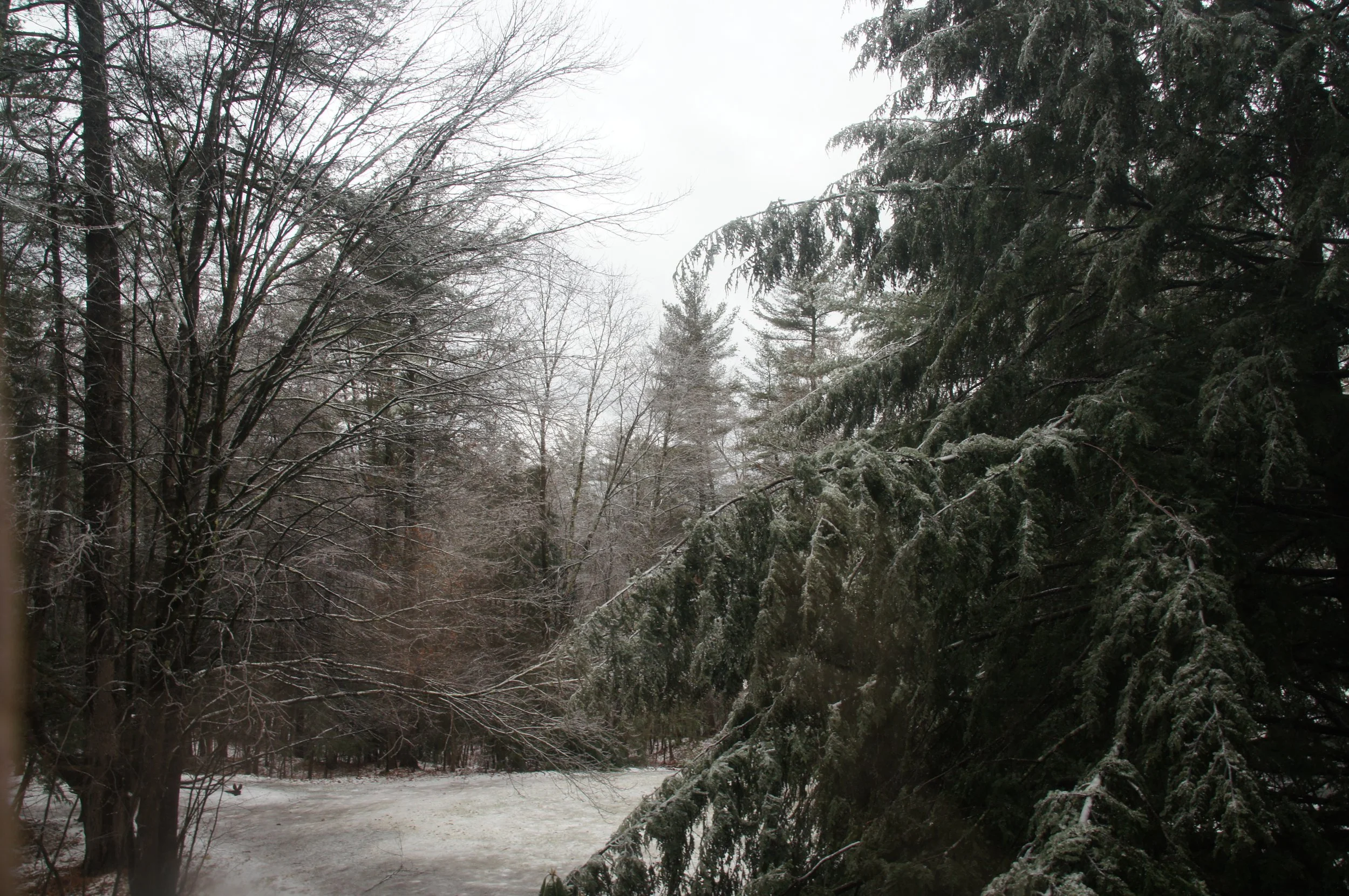
Sterritt Original - Evergreen Winter
It is with mixed pleasure to announce a new chapter in the history of Sterritt Strategy Publishing, Ltd (SSP). 2020 and 2021 were tough years for Sterritt Strategy as all sales of our products essentially stopped as Meetups canceled dates, Convention closed and word of mouth became shipment only. However, we here at SSP are still in it for the long haul and we have shifted our strategy as a company to become more hobbyist and far broader in our scope. Both founding brothers James and John have now found full time employment outside of our company and John Sterritt has moved to become exclusively part of our board of directors. Now Sterritt Strategy is looking to open up our doors to additional authors, game designers, and building a sales team.
The 2022 Plan
Evergreen Production
SSP has a new model for board game production, instead of the crowd sourced or the large batch builds that take forever to ship. We now are looking to make small batches, ready to order, essentially, custom made board games. This ready to order small inventory methodology is to focus on remaining ever present with as many titles as we can in a hobby scale personalized touch. How many board games can you be in direct contact with the designers, meet at conventions or events in your area, or discuss and expand the game to meet your table's need for a board game? The focus of this is to remain here for many years to come in all seasons and all hardships. To be much like an “Evergreen” tree, this evergreen idea isn’t new to the world, just to the world of small board manufacturing, at least to our knowledge.
Product Lines
We now are in the hunt to start our evergreen product journey, 2022 and Beyond. Providing small scale, custom ordered board products and fresh designs that are living products continuing to print and sell at small volumes. This will be for ‘HexUR’ and ‘Battle for the Moon’, along with other projects potentially returning such as ‘Condottieri Conflicts’. ‘Merchants of Freeburg’ will have a broad distribution in 2022.
Merchants of Freeburg
Our main creative endeavor, we are looking not only to sell our final 80 boxes of our initial inventory from first edition, tinker with a possible redesign (operationally referred to as second edition), but also write and expand a fantasy creative universe surrounding explaining strategy and its impact on the world.
HexUr
The light and simple abstract strategy game currently as a ‘bag game’ release, will work towards a DropShip evergreen release by October 2022, and redesigning the components to make that expedient.
Battle for the Moon
This is a product reliant on custom made board game design. A large box Grand Strategy for 4 to more players. Currently in Beta with Customer encouraged to provide everneeded feedback for updated rules and components. Full release tentative for this Summer 2022
Condottieri Conflicts
Our Original Game is coming back this year, several copies have been found in inventory and will be up for sale soon!
Events
What are events that you would like to see us at this year and years to come? Are these meetup groups at your local game store, parties with friends, local conventions, or the major conventions? Prior to covid we had visited several Boston and New England local conventions such as Carnage, OSG, FallCon, ConnectiCon, and others, Groups on MeetUp that have come and gone, as well as Gencon and PaxEast. We are happy to announce that we are looking to start and sponsor Meetups in North Shore (Beverly at the Castle Board Game Cafe), Manchester NH (At Boards and Brews) and are looking to get close to Boston as well. We are also looking to host events at our Hollis, NH location once weather and covid improves; invite only, small table events. More like a friendly game night than anything major.
With all this in mind. We are always looking to provide a space for like-minded people to inform, create, and inspire. Whether discussing Strategy (a frequent conversation of ours); looking at gaming and its impact, on peoples, structures, markets, etc; or being a place for creatives to showcase their work. Sterritt Strategy is still committed as ever to fostering these ideas, and seeing as we are looking at more of the same in the year to come, we would like to make everyone reading this aware that we are looking for content submissions to be shared on this blog. Tell us what you’re working on, what you’d like people to learn about or show us how to improve in our hobby or in our daily lives. Contact us if interested in sharing here and welcome to the community. Sterritt Strategy is a publishing company that assists entrepreneurs, startups, and innovators through media initiatives. We here at Sterritt Strategy are looking to expand our content base to include a wide range of non-gaming life and business strategy content, if you think you have a great article like this one contact James R Sterritt at james@sterrittstrategy.com.
Thanks for taking the time to read this, expect more on the horizon.
SSP

WWI Strategies Everybody should remember
A look into the complicated and diverse strategies that the Major Powers had devised entering into WWI and their various levels of success.
WWI, contrary to popular belief, was not just a war about sitting tight in a trench while being shelled silly, all whilst the officers have no idea how to deal with any of the modern weaponry. Strategy adapted throughout the war. Traditional marching orders and the previous methods of looking at combat were discarded as the trenches grew deeper and the Race to the Sea ended without a flanking position. What came out of this? How did tactics and Strategic Planning differ? To answer those questions one has to look at how war was thought about before the Great War. Particularly how the various nations thought they were going to conduct WWI. This answer both how the fighting stagnated and why the powers of Europe found themselves in this issue.
Germany
The most famous military plan for the war was the one construed by the Germans. Namely one Staff-General, Count Alfred Von Schlieffen. He devised a plan of how German ought to deal with its continual nemesis France after the 1894 treaty that allied them to Russia. This forces Germany to consider the realities of a two front war with two of the more powerful nations in Europe, both of whom have numerical superiority, and drastically higher conscription rates (this was Bismarck’s nightmare). This left Schlieffen to deduce that the only war to win this conflict is to defeat the faster mobilizing France first. No by a frontal assault on the fortified regions abbutting Alsace and Lorraine. (Both of which would be targets for France to reacquire after the disastrous Franco-Prussian war.) But by maneuvering roughly 90% of the German army through Belgium taking the key rail-line of Liege and striking into the less fortified and less prepared French-Belgian border. While the remaining divisions in Alsace and Lorraine were to lure the French army into attacking by retreating across the Rhine into more defensible positions, forcing the French, in their glory-lust to take Alsace Lorraine and be too far extended to move back to defend Paris, a wing of the divisions from Belgium would then encircle the French army and France would be again humiliated by the numerically inferior German army. Leaving only the question of crossing the Marne and dealing with a skeleton crew manning ‘Fortress Paris’ (Verdun to Fort Douaumont). After this the German army would have to reel back to the Eastern Front to take up a ridged defense against the vast Russian army.
When this was conceived in 1905-6 this was a brilliant plan, one that likely would have resulted in a repeat of the Franco-Prussian War. But there was one glaring problem with it. The plan did not count on Britain sending expeditionary forces to defend Belgium’s neutrality, nor did it account for Belgium arming itself better. These changes in the state of Europe as well as Helmuth Von Moltke the Younger’s Schlieffen’s replacement (not to be confused with his uncle, one of the heroes of the Franco-Prussian War), the decision to not retreat across the Rhine and to not let any piece of German territory fall into enemy hands. Thus the Schlieffen Plan failed to deliver German victory. The assault stalled at the Marne, after taking three weeks just to take Liege (well behind schedule), and the French army could recover, move and adapt to their defenses. This gave Russia the time it needed to mobilize its large army across the vastness of the Russian Empire. Germany was only saved on the Eastern Front by the crafty planning of Von Ludendorff executed flawlessly by Von Hindenburg.
Austria-Hungary
Other nations had issues choosing the correct plan for the conflict. Austria had three plans for a conflict in the Balkans available, one for dealing with Serbia as an isolated threat, one for focusing on a mobilized Russian Army, and one for dealing with a small Russian force and the Serbians at once. Franz Conrad Von Hotzendorf, who was not informed quickly that Austria was at war with both Russia and Serbia, due in part to the ineptitude of the Austro-Hungarian government and in part to his own failures. And thereby the Austro-Hungarian forces were in disarray when the war started. Which proved catastrophic when one considers that all of these plans were based in the ‘Cult of the Offensive’ which meant they called on massive amounts of men to be called up, put in place and be readied to attack BEFORE war was to be declared, thus given them, the Offender the advantage. Austria wasted their advantage of planning and preparedness to blunder through much of the early war. This lead to Austrian forces struggling to deal with the smaller nation of Serbia in a timely manner and they too were ill-prepared for when Russia actually got their army to the border.
Italy
Other nations strategies were slightly more complicated and hidden with a great deal of secrecy. Italy was on the surface part of the Triple Alliance with Germany and Austria-Hungary (thanks to Otto Von Bismarck). When war would eventually break out in 1914 Italy considered Austria-Hungary the aggressor, not a defender, and thereby used their stance that was allowed if Austria-Hungary were to declare war on Russia. They declared their neutrality. This annoyed the Central Powers quite significantly, since Austria-Hungary considered themselves defending their integrity, and the Germans would have liked support in their efforts in France. Italy however had in secret promised France that they would not enter a war with them, but would instead enter the war against their traditional enemies the Austrians, whom they had to get Venice off of earlier and with whom they still had numerous territorial disputes. This occurred due to the apparent weakness of the Austrian forces, as noticed by Italian General Luigi Cadorna. The Italian forces plans for if a war were to happen with the Austrians previous to 1915 were that of a static defense with precise and definite counter offenses, not an offensive doctrine. The realities of the war and Italian over zealousness saw this front being relatively unsuccessful, largely due to the constraints of the rough Alpine terrain and Austria finally winning in Serbia, freeing up more men for this and the Eastern Front.
France/ Russia
France’s prewar planning resulted in plan XVII which called for selective and rapid deployment of the French army. So as to not be humiliated by the quickly deploying Germans. It also called for a massive system of fortresses and dug in positions to be erected throughout the French frontier regions to slow any assault on Paris. It also relied on the forces of their ally Russia, to mobilize by the time these positions had to be manned. Thereby the German build up would have to defend Prussia and the forces assaulting the positions would drastically lessen. However the plan also called for an offensive, since its origins in plan XI. This offensive was to be a push into Alsace Lorraine as well as a counter offensive in the Frontiers along the Belgian Border. The French attempts to take Alsace-Lorraine would prove to be disastrous resulting in tens of thousands of casualties for little if any gain. Also the French advances past their fortifications in the north led to a seriously lack of fielded manpower in the region resulting in a string of German Victories until the Battle of the Marne. Plan XVII was a disaster, saved only by the fact that the execution of the Schlieffen plan was flawed, and the entrance of additional British forces.
Britain
British strategy entering WWI involved establishing naval dominance over the increasing navy of potential rival, Germany. The British navy however outspent the German navy by a factor of two to one, and could not have been caught up with. The successful British-led blockade of the Central Powers would go on to be a feat of logistics and force several neutral nations to join one side or the other. In addition to naval blockade the British Army was sent as an expeditionary force to bolster France and Belgium, to some success, stalling the Germans enough that the Schlieffen Plan in all its rigorous scheduling faltered. In addition to this British Command was split into two camps and two strategies. One was the Westerners, those that attributed success in the Western Front and focused on it to win the war. The other was the Easterners who sought to make a new front in the East against the ‘poor man of Europe’ the Ottomans, thinking that they would be easier targets. This lead to the Dardanelles and the disaster at Gallipoli. This after the disastrous misadventures in the Baltic lead to a growing sense that military planners were throwing away British manpower. Then came the Mesopotamian front and the Arab revolt. Where the Easterners saw some success. One of which used little British manpower. There was also contemporaneously a front opened in Greece, to some questionable legality given that Britain only entered the war to secure the independence and neutrality of Belgium. That being said the forces in Greece and Mesopotamia offered fronts with less high casualty rates that the massacre that was the Western Front.
Great Resources for Books

From Around the Web
https://encyclopedia.1914-1918-online.net/article/pre-war_military_planning_austria-hungary
https://encyclopedia.1914-1918-online.net/article/pre-war_military_planning_italy
https://www.britannica.com/event/Schlieffen-Plan
https://www.britannica.com/biography/Frederick-III-king-of-Prussia-and-emperor-of-Germany

Games on the Horizon Nov 2017
Three fantastic PC games set in the Great War
This month we are focusing on
Verdun/ Tannenberg
Great Strategic first person shooter. Beautifully remastered in the case of Verdun. Tannenberg is the next game in the series by the same publisher which will focus on the Eastern Front. The developers offer larger maps, smoother high graphics and realistic detail to the expansion. I have heard rumors of larger server sizes, but have not as of release witnessed this first hand yet. Should prove to be a worthy sequel and continuation of the real best WWI shooter.
Iron Harvest/Scythe
This may prove to be what
Yet all of this is being built


And have several PC and
www.stonemaiergames.com/games/scythe/digital-games-merchandise/
Hearts of Iron IV: Great War Mod
A fun series, on an interesting Mod for HOI IV. My gratitude to the Modders, Wolferos and his team. They made an incredible mod for the beloved WWII grand strategy game that plays well and is fairly stable even in multiplayer. Checkout Strategist Primus’

The 99 Day Kaiser
If this one man lived a little longer, or got to raise his son himself, WWI would not have escalated into the size of a conflict that would demand attention and be known as a skirmish in the Balkans.
The ill-fated 99 day Kaiser was and remains a polarizing, what if in German history. Some see him as a would have been the savior of Liberal Germany, others as just another crown prince caught up in the Romantic movement. Most agree that Friedrich III, King in Prussia and German Kaiser would generally be a liberalizing force on the end of the 19th century. To many he is a footnote often forgotten or overlooked in history classes and never spoken of in any great detail. He was a complex and obscure character in the era. One that deserves an explanation and examination, he has never really received. Friedrich III did not have much of an impact on German politics historically, due in part to being bedridden and dying for most of his 99 day reign in the Year of Three Kaisers, shortly after his Father Wilhelm I, and also due to the domineering of Otto Von Bismarck. We know that Friedrich was heavily influenced by his British wife Victoria (eldest daughter of Queen Victoria) and even before marriage he had liberal sympathies. This caused him to come into constant conflicts with the Iron Chancellor, and he never really could convince his father to listen to him. His importance in alternative history is that he is constantly used as a pivoting point away from WWI or other WWI-like actions ever occurring. Is this really fair? Did one man succumb to esophageal cancer really ‘doom’ our timeline?
The truth of the matter is little is known of what he actually had planned. Bismarck feared he would replace him as Chancellor the leader of the Progressive party. Though there is little said about what he would actually implement for domestic policies, aside from constitutional reform and the potential replacement of Bismarck. What is known is he had significantly stronger ties to foreign powers, especially Britain. In 1858 he married Queen Victoria's eldest daughter, also named Victoria. This was arranged after a long and drawn out feud with his father, who was still crown prince. Wilhelm I wanted him to marry a Russian duchess, probably to strengthen the Russo- Prussian Alliance of the post-Crimean era. Victoria would go on to have a strong influence over Frederick, as such she is worth noting. What we can expect from Frederick's reign is a temporary warming of relations between Britain and Germany. A modified constitution transitioning away from Prussian Constitutionalism. As well as several less years of Otto Von Bismarck, which may or may not have been a good thing. It would be better for liberalism in Germany, however Bismarck held the concert of Europe together for decades and it would be interesting to see if the progressives could replace him with a Chancellor as adept at maneuvering the other powers. Or if their more peaceful diplomatic attempts would have fallen on deaf ears and encourage a Conservative revitalization.
However, Friedrich had been already 57 when he died, admittedly he might not have lasted long enough to make it through to the Era of WWI (though his father made it to 90) Frederick would have a harder time convincing the fledgling German state to listen to his radically different opinions. That being said, the question of the 99-day Kaiser is one we must seek to address. If only because there is a chance he could have potentially reigned for 30 years. It is not a likely one, but it was a possible outcome. What would be more likely to be impactful was if the man he actually got to raise his own son. We know that his son, Kaiser Wilhelm II would definitively reign after Friedrich. Wilhelm was raised by tutors, few, if any actually selected by his parents, most selected by Kaiser Wilhelm I. This was due in part to his withered arm and the German Kaiser’s attempt to make a man of him. An attempt that his mother supported, in part because she blamed herself for his deformed arm. The Kaiser-to-be was raised to understand that his father is a war hero of the Austro-Prussian and Franco-Prussian wars. He never was brought up to understand the Classical Liberal ideals of his parents were meant to apply to Germany. If Friedrich was merely permitted to raise his own son, or at least have more of a role in the process, Wilhelm could have been a very different Kaiser. Instead he was raised in the hyper-militaristic Prussian military aristocratic standard. One that saw Wilhelm dismiss Bismarck for being ‘too peaceful’ as anti-British and anti-Russian sentiments roared up in Germany. As opposed to being anything like his peace loving father. Who said, "I do not like war, gentlemen. If I should reign I would never make it." to a British paper, not two years after the ‘glorious’ Franco-Prussian war.
And so the 99 day Kaiser would have made for an incredibly different Germany, if he had not spent his entire reign slowly succumbing to throat cancer, after decades of smoking to ‘cure’ what may have been asthma. And so the hope for a Liberal Germany, died with him only to resurface after two disastrous World Wars. How many lives we lost from this man only being a footnote in history? We may never know.
Further Reading:
Balfour, Michael. The Kaiser and his Times. Boston: Houghton Miffen, 1964.
Clark, Christopher. Iron Kingdom: The Rise and Downfall of Prussia 1600-1947. London: Penguin Books, 2008.
Von Poschinger, Margete Landau Edel.The Life of The Emperor Friedrich. Berlin, 1901.
Nichols, J. Alden.Year of Three Kaisers. 1987.
Popular Biographies on the Web
Him, Frederick III of Prussia and the 99 day Kaiser
https://www.britannica.com/biography/Frederick-III-king-of-Prussia-and-emperor-of-Germany
Victoria, Wife of Frederick
https://www.britannica.com/biography/Victoria-wife-of-Frederick-III-of-Prussia